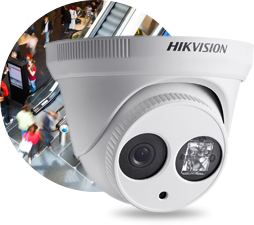
The accuracy of intelligent recognition and analysis in comparable scenarios remains inconsistent with CCTV systems.
Traditional intelligent CCTV analysis algorithms still have many flaws. Human facial recognition, an example of an intelligent recognition and analysis process, involves two steps. Features are extracted and then 'classification learning' is performed.
The degree of accuracy in the first initial step has a direct impact on the accuracy of the algorithm. With shifting angles and lighting, many features can be difficult to detect. And so, while traditional intelligent algorithms perform well in specific environments, subtle changes such as environment and image quality yield significant challenges to accuracy.
Classification learning, (step 2) involves target detection and attribute recognition. Put simply- when the number of available categories for classification rises, so does the difficulty level.
Taking this into consideration, traditional intelligent CCTV analysis technologies are highly accurate in vehicle analysis but not in object or human analysis. Because humans have a classification of their own, unlike vehicles who can be categorised, a very high level of difficulty is created.
So, the need for increasing the 'depth' of intelligence in big data for the security industry is forever arising. |
|
 |
| Outstanding CCTV analysis solutions from industry leading experts, provided across Stoke on Trent |
|
|